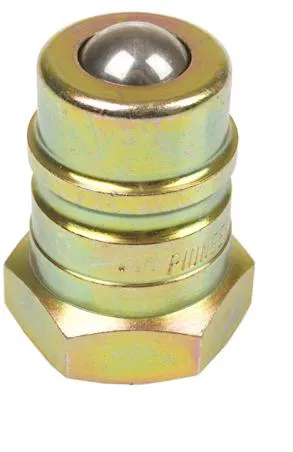
If you’ve ever dealt with leaky hydraulic connections, you know how quickly a small drip turns into a big problem. This Pioneer male tip gives you a solid, leak-free connection for your 3/4″ hydraulic systems. Whether you’re hooking up a loader, connecting remote hydraulics, or swapping implements, this tip seals tight and keeps your hydraulic fluid where it belongs—in the system, not on the ground.
What You’re Getting
- Poppet valve design creates a positive seal that prevents fluid loss when disconnected
- 3000 PSI rating handles the pressure from your tractor’s hydraulic pump without breaking a sweat
- 28 GPM flow capacity means it won’t choke down your hydraulic flow when you need maximum power
- 1-5/16″ wrench flats give you a solid grip for proper installation without rounding off
- Compatible with 5209-6M Series dust caps to keep dirt and debris out when not in use
Built for Real Farm Work
This male tip works with Pioneer quick coupler systems across a wide range of tractors and hydraulic equipment. The 3/4″ NPT thread size is standard on many mid to larger-size tractors where you need higher flow rates for loaders, three-point implements, or hydraulic motors. The robust construction handles the constant connect-disconnect cycle that comes with changing implements throughout the day.
Made to Last
Pioneer builds these tips to withstand the harsh conditions of farm life. The poppet valve mechanism is engineered to maintain its seal through thousands of connections, and the 3000 PSI pressure rating gives you plenty of safety margin over typical tractor hydraulic system pressures. The precision-machined components maintain tight tolerances to ensure reliable sealing over the long haul.
Installation Notes
Thread this tip directly into your hydraulic line or manifold using the 3/4″-14 NPT threads. Apply proper hydraulic thread sealant—never use tape that can contaminate your system. A snug fit with proper sealant beats overtightening every time. The poppet valve means you won’t lose fluid when disconnecting, but always relieve system pressure before installation or removal for safety.